Deixe um recado

Combustíveis verdes flexíveis: a peça que faltava na transição energética das ilhas.
Introdução: Os desafios únicos enfrentados pelos sistemas de energia insulares
Os sistemas de energia em ilhas enfrentam restrições estruturais fundamentalmente diferentes das redes elétricas continentais. Muitos operam isoladamente, com diversidade de geração limitada. Devido à sua localização geográfica remota e aos altos custos logísticos, o fornecimento de eletricidade é altamente vulnerável à volatilidade dos preços dos combustíveis. A exposição a desastres naturais torna a confiabilidade crucial, mas a escala do sistema permanece limitada.
Com o aumento da penetração de energias renováveis, os sistemas energéticos insulares buscam caminhos viáveis para reduzir a intensidade de carbono, mantendo a segurança do abastecimento.
Em regiões como as Ilhas do Pacífico e o Caribe, a geração de energia a diesel continua sendo a principal fonte de eletricidade.
Paradigma tradicional: primeiro a geração de base, depois as energias renováveis.
Historicamente, o planejamento energético para sistemas insulares seguiu uma lógica clara:
Considerando as estruturas de custos históricos, essa estrutura era racional. A geração de energia a partir de combustíveis fósseis proporcionava estabilidade, enquanto as energias renováveis atuavam como um recurso suplementar que podia reduzir, em certa medida, os custos gerais de eletricidade.
No entanto, com o progresso tecnológico contínuo, essa suposição está sendo gradualmente questionada.
Novas evidências: a flexibilidade pode ser mais importante do que a estabilidade.
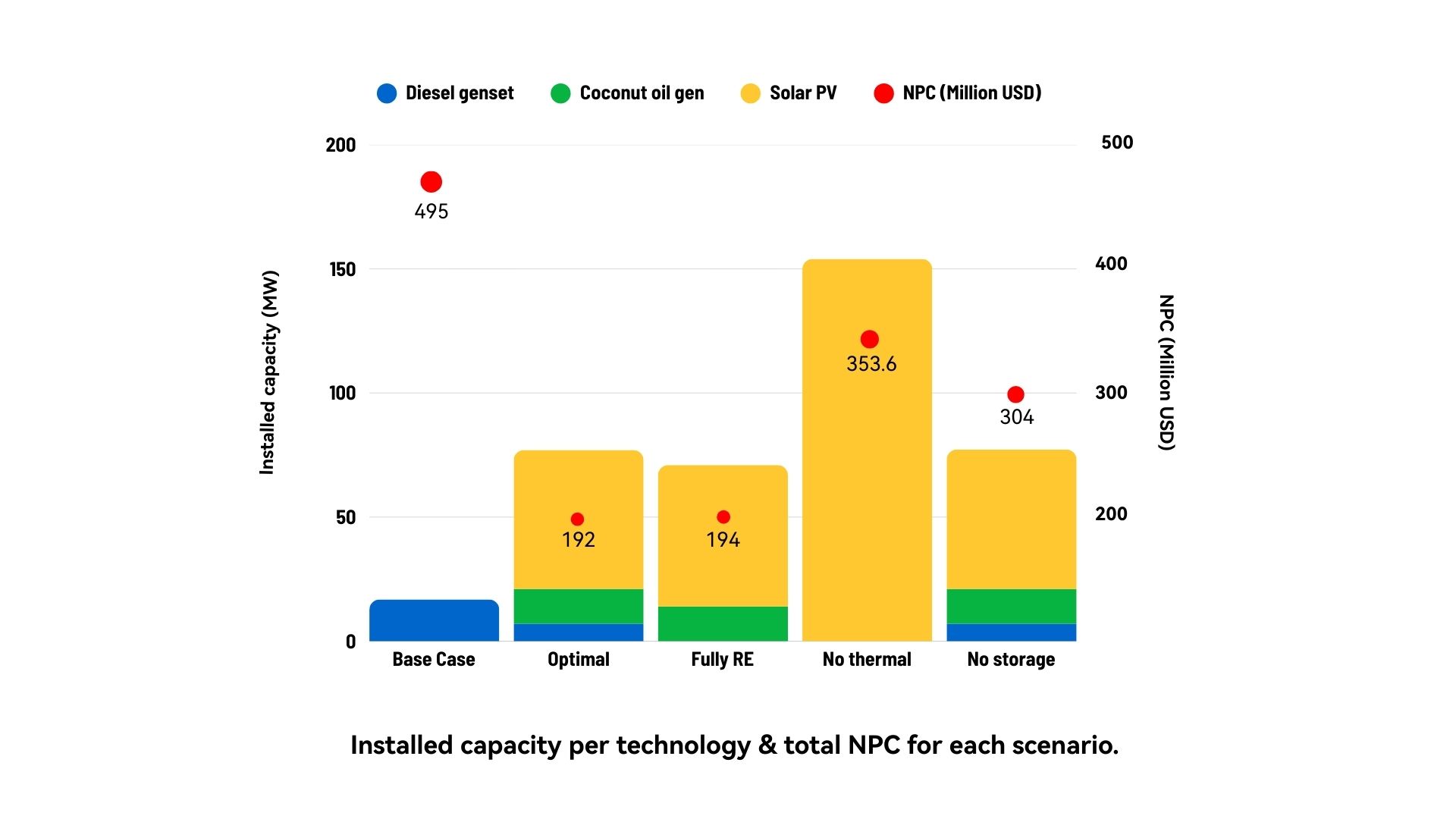
Pesquisas recentes que utilizaram o HOMER Pro para modelar uma rede elétrica em uma ilha do Pacífico indicam que a configuração ideal pode não exigir geração de base convencional.
Configuração ideal:
Energia solar fotovoltaica + armazenamento em baterias + 4% de geração de biomassa para redução de pico de demanda
A descoberta mais surpreendente não é a presença de biomassa em si, mas a escala de sua contribuição, de apenas 4%.
Essa pequena parcela pode proporcionar:
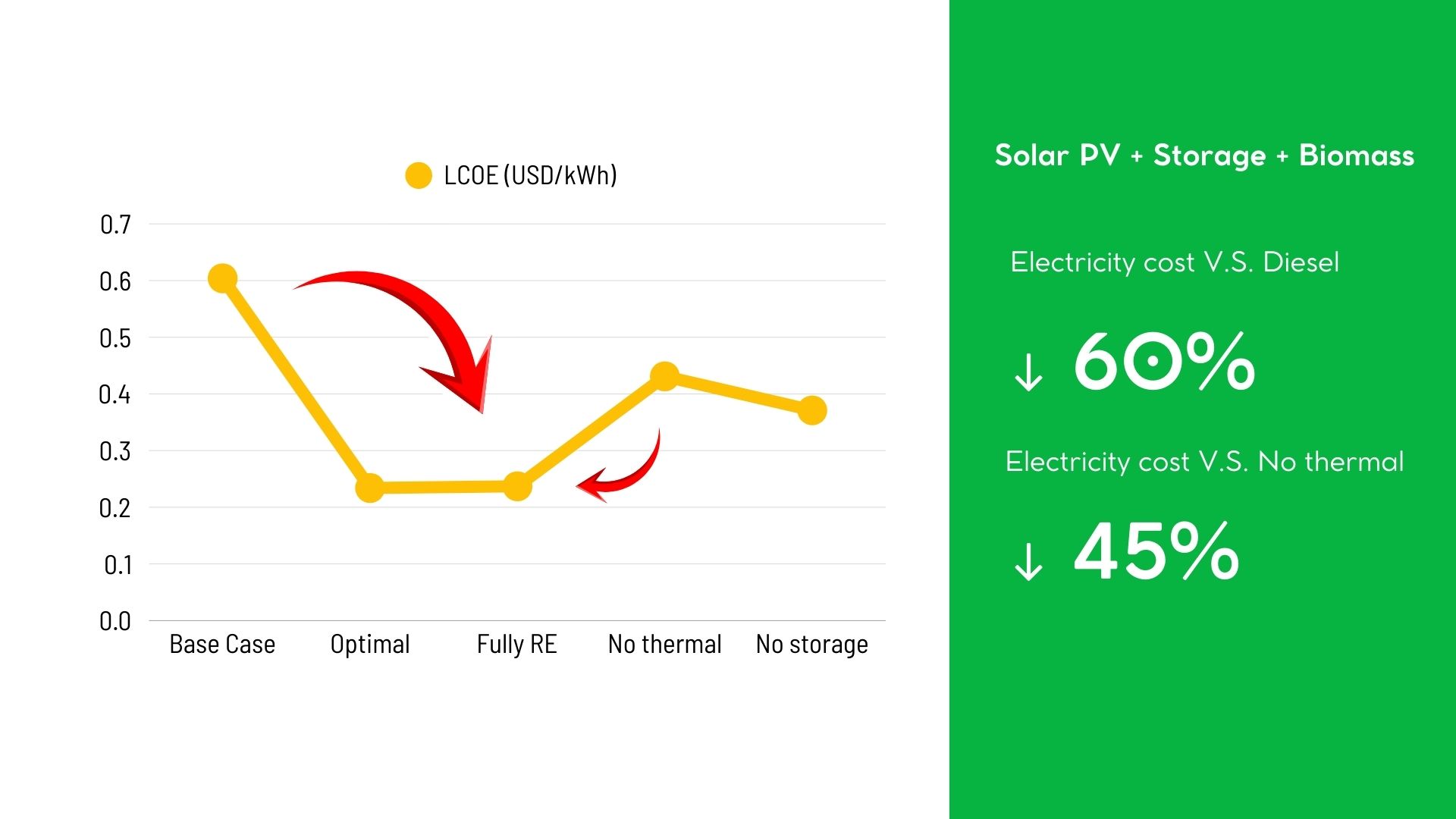
Em comparação com sistemas a diesel, o custo nivelado da eletricidade pode diminuir em até 60,8%. Em comparação com uma configuração puramente solar com baterias, o LCOE pode cair 45%.
Notavelmente, esses resultados ocorrem mesmo em um país insular com recursos solares apenas moderados.
Por que uma parcela tão pequena pode remodelar todo o sistema?
Em redes isoladas, o dimensionamento do sistema é determinado por condições extremas, e não pelo desempenho médio.
Períodos de pico de demanda, intervalos de baixa produção de energia renovável e requisitos de reserva levam os planejadores a superdimensionar os ativos de geração e armazenamento. As baterias, em particular, devem ser dimensionadas para suportar esses cenários críticos.
A introdução de uma pequena quantidade de combustível verde despachável altera essa dinâmica.
Ao suprir eventos de pico de demanda pouco frequentes, a geração flexível de biomassa reduz a necessidade de construir infraestrutura excessiva de capacidade renovável e armazenamento, diminuindo significativamente o investimento total de capital.
Esse fenômeno sugere que a própria perspectiva do planejamento energético pode precisar mudar.
No futuro, o principal desafio para os sistemas de energia poderá não ser mais o fornecimento de carga base, mas sim como melhorar a confiabilidade, a flexibilidade e a resiliência em geral.
A amônia como combustível verde flexível está ganhando destaque.
A amônia possui diversas características relevantes para os sistemas energéticos modernos:
Ao contrário das soluções de armazenamento puramente elétricas, a amônia permite o armazenamento de energia renovável em forma química por longos períodos e até mesmo sazonalmente. Ela pode ser produzida a partir de hidrogênio verde utilizando energia renovável, transportada globalmente e utilizada quando necessário.
Em redes insulares, a amônia não precisa substituir a geração de base para gerar valor. Mesmo uma implantação limitada como combustível de pico pode gerar benefícios sistêmicos, reduzindo a necessidade de capacidade excessiva de energia renovável e armazenamento.
Conclusão
À medida que as tecnologias continuam a evoluir, os combustíveis verdes flexíveis podem deixar de ser um componente marginal dos sistemas de energia para se tornarem um facilitador estrutural de redes elétricas práticas e com alta participação de energias renováveis.
Elas podem muito bem representar a chave para desbloquear a próxima etapa da transição energética.

 IPv6 SUPORTADO POR REDE




Deixe um recado
Digitalizar para Wechat :
